Author: Brandi With An I
•10:47 AM
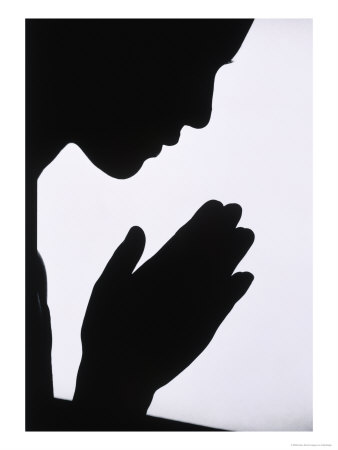
Make Time To Pray 
by Tom Smith, Wooddale Church of Christ

1 Thessalonians 5:17 Pray without ceasing. 

Do you feel guilty because you aren't able to spend long periods of time each day in prayer?

Perhaps you have a regular but brief time when you read the Bible and pray, but you lack a sense of God's presence in your life.

You feel you aren't communicating enough with your heavenly Father.

That's a problem that plagues individuals whose lives are incessantly busy.

Here is some helpful advice for Christians from the 17th-century French writer Francois Fénelon.

"Learn," he counsels, "to make good use of chance moments: When waiting for someone, when going from place to place, or when in society where to be a good listener is all that is required, at such times it is easy to lift the heart to God and thereby gain fresh strength for further duties . . . . One moment will suffice to place yourself in God's presence to love and worship Him, to offer all you are doing or bearing, and to still all your heart's emotions at His feet."

We can train ourselves to maintain an awareness of the Lord's presence with us throughout the day and to talk with Him as we are able.

That's how we can obey the apostle's command to "pray without ceasing".
To make the most of your time, take time to pray.
Author: Brandi With An I
•10:59 AM
Does praying for someone negate their exercise of free will?


Topic(s): Prayer
 Todd Clippard

Yours is a very difficult question. All men do indeed possess free moral agency. But I'm not sure how praying for an individual would supplant or interfere in the exercise thereof. For example, when I pray, I pray for what is best for an individual. At the same time I pray for God's will to be done in all things. I think it best to pray that an individual will act in accordance with God's will, instead of praying for a specific course of action.

So long as we pray for what is best for an individual, and pray for understanding and the courage to accept God's will, I believe we ought to pray for others. In 1 Timothy 2:1-5, we are commanded to pray for our leaders that we might live quiet and peaceable lives. I don't think this is an attempt to usurp their free moral agency, any more than praying for myself is an attempt to have God intervene without my personal exercise of free moral agency.

Part of the difficulty is not knowing HOW God works in the lives of men. I believe prayer changes things, and I believe God works in the lives of men. However, it is difficult, if not impossible, for me to immediately point to any specific event and say, "This is the providence of God." An older, wiser, preacher-friend of mine once told me, "Always wait at least 15 years before crediting God with anything." What he meant was that sometimes we give God credit for things that end up hurting us in the long run, when our own poor decisions are the cause of the difficulty.

[ SOURCE ]
Author: Brandi With An I
•8:30 AM
If I have sinned or fallen away after becoming a Christian, should I be baptized again?
Todd Clippard
Topic(s): Christian Life, Salvation, Forgiveness, Prayer

As a Christian, one need not be baptized again to receive forgiveness. You must be willing to repent of your sin, confess it to God, and ask for forgiveness.

Simon the Sorcerer was a Christians who tried to buy the gift of the Holy Spirit. Peter told him to repent and pray for forgiveness (Acts 8:9-22).

John said if we (Christians) confess our sins, God is faithful and just to forgive our sins and cleanse us from ALL unrighteousness - 1 John 1:9.

When Christians walk in the light, they enjoy fellowship with God and fellow Christians, and Jesus' blood cleanses them from all sin - 1 John 1:7. This means we will sin even though we are doing our best. What is important is to recognize that we do sin and be ready to repent whenever necessary.

You need to trust in God and His promise to forgive. God can and will forgive any penitent Christian.

Author: Brandi With An I
•2:13 PM
I Need Patience to be Patient
by J. Raymond Pecoraro


I remember the time I spent in ministerial school as I studied to be a gospel preacher. It seemed that the time to graduate was in the distance …far distance. 

I had to learn patience before I could learn anything else. 

But we all see impatience on a daily basis, especially if you have small children! 

They want things now! 

They want to know when we are going to get there if we are traveling! 
They are constantly asking if we are there yet & it seems they ask every five minutes or so! 

But as we get older, we learn patience, maybe just not to the extent we would like too.

Our timeless Lord requires that we learn to be patient as our faith increases. 
Delays & trials for the things we really want or really need are worth the waiting. 

Waiting helps to develop patience and as we add patience to God’s virtues we get better! 

It is a marker that we are growing into mature Christians. 

Time is the source for our faith to mature! 
And a wise Christian isn’t shy about asking God to grand him patience.

The Psalmist stated, “Out of the depths I have cried to You, O Lord; Lord hear my voice! Let your ears be attentive to the voice of my supplications. If You, Lord, should mark my iniquities, O Lord, who could stand? But there is forgiveness with You, That You may be feared. I wait for the Lord, my soul waits. And in His word I do hope. My soul waits for the Lord more than those who watch for the morning. O Israel, hope in the Lord; for with the Lord there is mercy, And with Him is abundant redemption. And He shall redeem Israel from all his iniquities.” (Psalm 130:1-8)

If we look at the brighter side of waiting, we will understand that many prayers go up to our Father during the interim of our waiting! 

We have many examples of patience in the Old Testament alone:
1. Jacob waited seven years for a wife & then he worked another seven years after her father tricked him. (Gen.29:15-20)
2. The Israelites waited 400 years for deliverance to come their way.
3. Moses waited 40 years before God called upon him to rescue God’s people from Egyptian bondage.
4. Moses also waited 40 more years for the Promised Land, of which he could not enter.

“My soul waits for the Lord more than the watchmen wait for the morning.” (Ps. 130:6)
The image depicted here of the watchmen would be they are nearing their shift’s end & they are counting the minutes before they can return home!

We ought to pray for patience that is needed so we may be able to handle the difficult times. 
We must never become discouraged & give up! 
We must keep on hoping, anticipating, believing because the patience God grants unto us will ultimately see us through. 
The joy that crosses our faces when we have what we waited for is now come to fruition is beyond explaining! 

The great prophet Isaiah in the Bible book by his name has one of my favorite sayings, “Those who wait on the Lord shall renew their strength; they shall mount up with wings like eagles, they shall run & not be weary; they shall walk & not faint.” (Isaiah 40:31). I have this verse inscribed on a pedestal with a brass eagle sitting proudly & majestically on top. Every time I see it & read the inscription of Isaiah 40:31, I am reminded of the patience I must constantly pray for & put into practice! 

We must constantly be reminded that God seldom does great things in a hurry! 
But these great things from God far exceeds the waiting period.

The most valuable thing that should never be put off is one’s salvation! 

The Bible tells us “today is the day of salvation; now is the acceptable time.” 
Christ died for our sins by shedding His precious blood upon the cross. 

The Gospel is the answer (the only answer) for anyone to receive eternal life. 
(Romans 1:16; Luke 13:3, 5).
Author: Brandi With An I
•1:40 PM
What are some keys to effective prayer?


Bob Prichard
Topic(s): Christian Life, Prayer

Foremost in prayer we must recognize the sovereign power of God. 

He hears prayer and forgives sin. 
If we confess our sins, he is faithful and just to forgive us our sins, and to cleanse us from all unrighteousness (1 John 1:9).  

Confession of sin is more than just admitting the sin. 

In confessing sin to God, we agree with Him about the nature and effects of sin. He knows what we have done, so in confession we acknowledge that He as Lord has the power to forgive us and cleanse us of unrighteousness. 

We should not fear confessing sin to God, because His matchless love for us is demonstrated by the cross of Christ. 

In recognizing with God the nature and effect of sin, we realize the inherent need to make restitution to others for our sin. 

The Philippian jailer made restitution for the harsh treatment of Paul and Silas: He took them the same hour of the night, and washed their stripes; and was baptized, he and all his, straightway (Acts 16:33).

As He prepared to face the cross, Jesus prayed, Father, if thou be willing, remove this cup from me: nevertheless not my will, but thine, be done (Luke 22:42). 

Effective prayer must be marked by this attitude, not my will, but thine, be done. 

We must pray according to God's will. 
We may not always know fully what the will of God is, but we will know that His will is always consistent with the scriptures. 
The better we know His written word, the better we will be able to keep our prayers and our lives in tune with His will. 

James lamented that some chose not to pray according to God's will: Ye ask, and receive not, because ye ask amiss, that ye may consume it upon your lusts (James 4:3). 
We must pray according to His will, and do all that we can to let His will be done.

Even though the disciples were religious, and had prayed all of their lives, they knew that Jesus was different, so one said, Lord, teach us to pray (Luke 11:1). 

In response, Jesus gave a model prayer. 

Our Father which art in heaven, Hallowed be thy name. 
Thy kingdom come. 
Thy will be done, as in heaven, so in earth. 
Give us day by day our daily bread. 
And forgive us our sins; for we also forgive every one that is indebted to us. 
And lead us not into temptation; but deliver us from evil (Luke 11:2-4). 

He immediately then told a parable about persistence as a man begged for help from a friend. The friend helped, not because of friendship, but because of his importunity, or persistence in asking (Luke 11:8). 

Christ then pointed out that God will give to His children as any good father will, but He expects importunity, or persistence in prayer.

Fervency is another characteristic of effective prayer. 

God's people have always prayed with forceful sincerity. 

Elias was a man subject to like passions as we are, and he prayed earnestly that it might not rain: and it rained not on the earth by the space of three years and six months (James 5:17). 

We read of Christ; And being in an agony he prayed more earnestly: and his sweat was as it were great drops of blood falling down to the ground (Luke 22:44). 

The formalism of many prayers needs to be replaced with the fervency of real belief in God and in His promise to hear and respond to our prayers.

[ SOURCE ]